
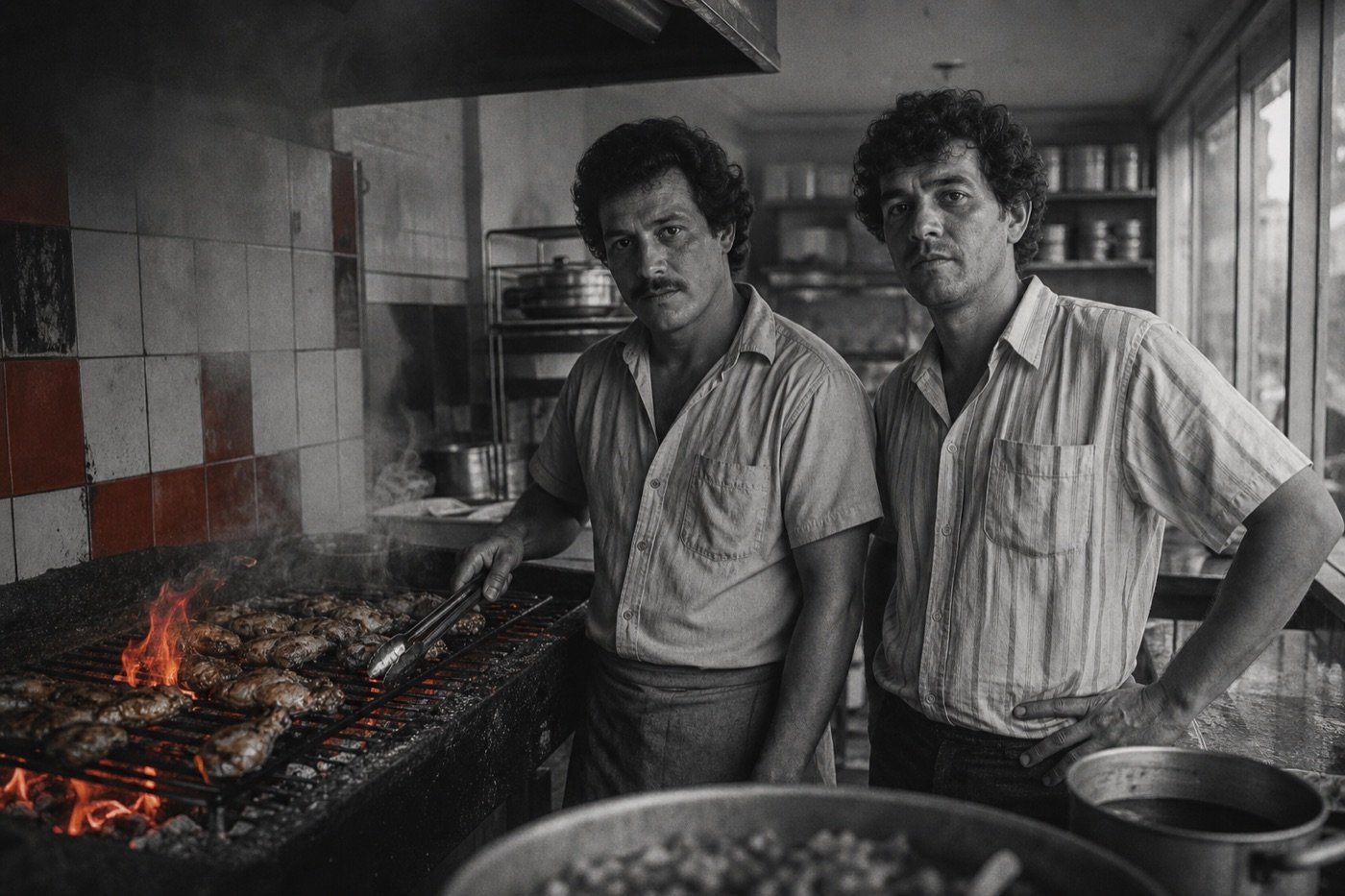

One afternoon in 1987, Fernando Duarte took his colleague Robert Brozin to lunch at a small Portuguese-Mozambican takeaway called Chickenland, in Rosettenville on the south side of Johannesburg. The two had met in the electronics trade, at Teltron, the firm run by Brozin’s father, where Brozin handled marketing and Duarte was on the technical side. This was a lunch between friends, not a business meeting.
Then Brozin tasted the flame-grilled peri-peri chicken, and the lunch became something else.
By his own telling, he was floored by it. Not impressed in the polite way you are impressed by a good meal, but struck hard enough that he turned to Duarte and suggested they buy the place. Neither man had run a restaurant. Neither man had cooked at any scale. Brozin assumed, at first, that it would be a passive investment, that Duarte would actually work in it and that he would simply put in money and watch.
That was the bet. Two men who knew nothing about restaurants, buying a restaurant, on the strength of a single plate of chicken.
It is worth being honest about what this story is and is not. Duarte and Brozin did not invent peri-peri chicken. They did not even create the recipe. The dish had been brought to South Africa by Portuguese settlers from Mozambique and Angola, and it lived quietly on the menus of small family-owned takeaways like Chickenland. What the two founders did was spot a product that already worked, and then make a decision almost nobody in their position makes. They decided it could be a brand.
They bought a recipe, not an idea
There is a useful distinction buried in how Nando’s started, and it is one most founders get wrong.
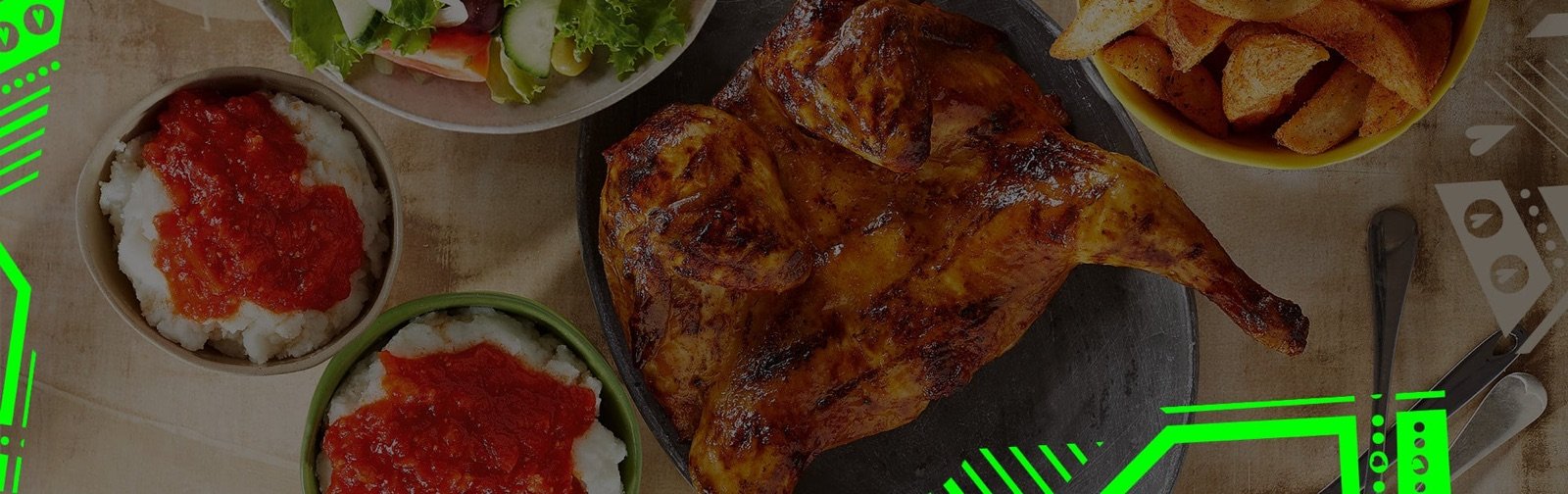
Duarte and Brozin did not begin with a clever concept in search of a market. They began with a product that already had customers, already had demand, and was already loved by the people who knew about it. The peri-peri chicken at Chickenland worked. The proof was on the plate and in the queue.
What it lacked was reach. The dish was trapped inside a handful of Portuguese takeaways in a few suburbs of a few cities. Nobody had asked the obvious question, which was why this could not travel.
So the founders did not gamble on whether people would like the food. That question was already answered. They gambled on whether they could take something that worked in one corner of Johannesburg and make it work everywhere. That is a much better bet to make than betting on an untested idea, and it is a distinction worth sitting with. The risk was not the product. The risk was the scaling.
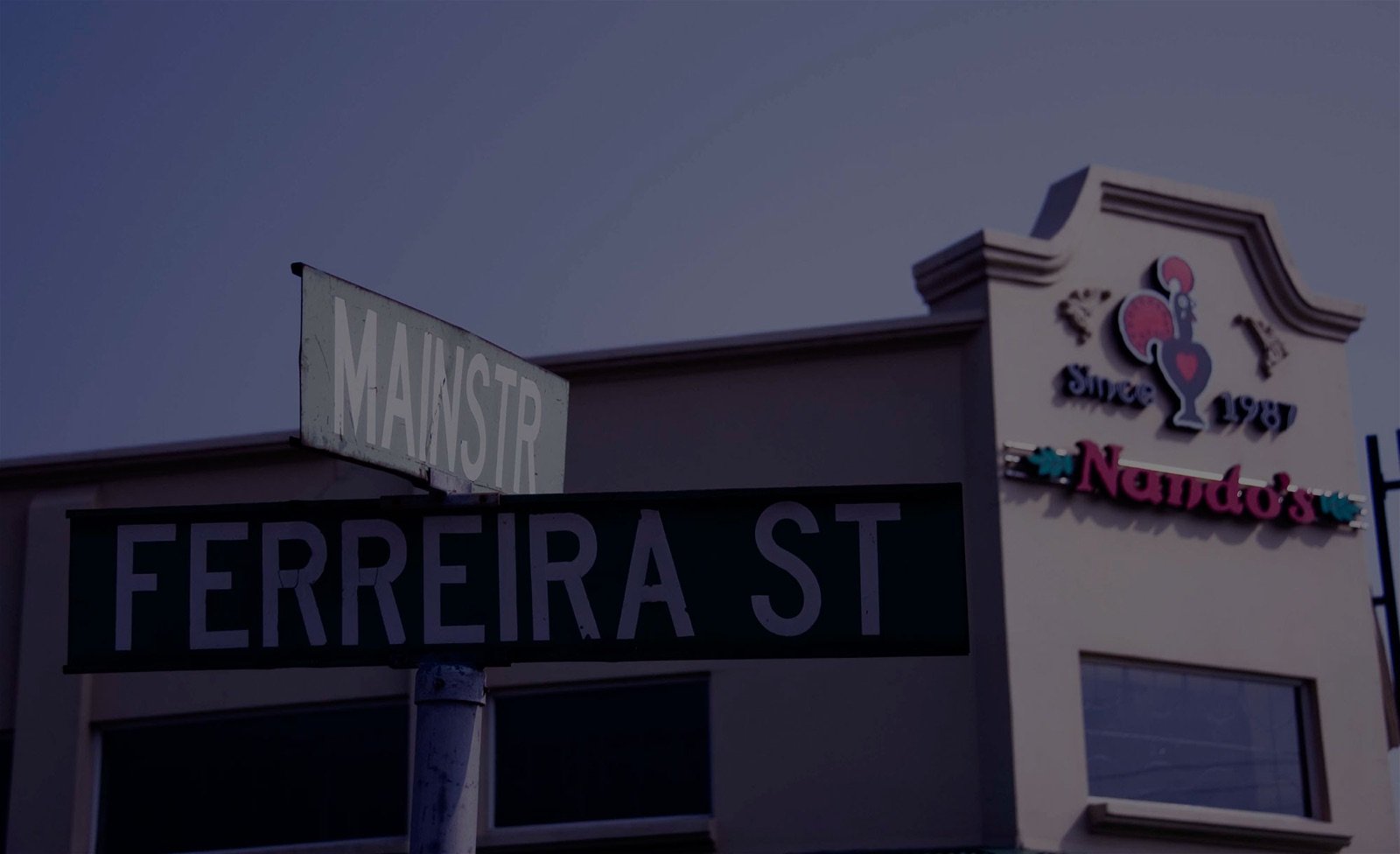
In 1987 the two of them bought into the business together, taking a third each, which left the original operator holding the final third. Their share cost around R80,000, about £25,000 at the time, and Brozin put up most of it with money from family and friends while Duarte ran the restaurant. They renamed it after Duarte’s young son, Fernando, known as Nando. Brozin has said the first choice was actually Fernando’s, but that name was already taken by a bed and breakfast in Port Elizabeth, so Nando’s it became. The logo took the Rooster of Barcelos, one of the most recognisable symbols in Portugal.
A side detail tells you something about the two of them. Brozin expected to be a hands-off investor. Instead he found himself behind the counter and loved it. Duarte, who was meant to be the operator, enjoyed it less. So, in the way that restless founders do, the pair started a second business five hundred metres away, a television and video repair shop called Circuit City. They sold it eventually, and Duarte came back to Nando’s full-time. By around 1990 they had bought out the operator’s remaining third, taking full ownership of a business they had walked into as customers three years earlier.
The decision that actually mattered
Here is the part most retellings skip, because it is less fun than the chicken.
Very early on, before there was anything resembling an empire, Brozin and Duarte decided that Nando’s was not going to be a restaurant. It was going to be a brand. In Brozin’s words, it had to have a personality. It had to be something people could identify with, touch and feel.
Think about how unusual that is. They had one shop in Rosettenville. They had no money to speak of, no track record, and no reason for anyone to care what their little chicken business stood for. And they decided, at that exact moment of having almost nothing, that the thing they were building was an identity, not just a kitchen.
That decision is the whole story. It is why Nando’s adverts became famous for being cheeky, irreverent and willing to provoke, while its competitors ran discount specials. Years later, in 2011, the brand ran a festive advert called Last Dictator Standing, featuring a Robert Mugabe lookalike dining alone and reminiscing about other departed strongmen. Nando’s pulled it after threats were made against its staff in Zimbabwe, but the instinct behind it, the willingness to be the naughty child in the room, had been there from the very start. It is also why the brand could eventually charge more than a takeaway and have people happily pay it. The flame-grilled chicken got customers in the door the first time. The personality is what made them come back, and what made them talk about it.
The product gets you the first sale. The brand gets you the second one, and the right to charge more for it.
This is the lesson I would underline twice. A lot of businesses build the product first and bolt on the brand later, once they can “afford” it. Nando’s did it the other way round. It treated the brand as the actual product and the chicken as the proof. That sequencing, brand as the point rather than the polish, is rare, and it is most of why a Rosettenville takeaway is now recognised by more than nine in ten adults in Britain.
The restaurant business is brutal, and they knew it
None of this was smooth. Brozin has been refreshingly blunt about it. He has said plainly that they knew nothing about the restaurant business, and that, to be honest, they still do not know everything, because you learn every day. He has called the restaurant trade brutal, one of the hardest businesses there is.
That honesty matters because it explains their strategy. They were two outsiders taking on established players with far more money and experience. They could not win on scale or on spend. So they made a deliberate choice about how they would compete. The business had to be people-focused, and it had to be innovative, precisely because they were taking on the big boys and could not beat them at their own game.
That is the underdog playbook, stated cleanly. When you cannot outspend the incumbent, you out-personality them. You make the experience and the feeling the thing people buy, because that is the one area where a scrappy challenger can beat a giant. Nando’s did not try to be a cheaper version of the established chains. It tried to be a different kind of thing entirely, and it leaned into being different rather than apologising for it.
There is also the matter of timing and place. Nando’s was founded in 1987, in the final, uncertain years of apartheid, in a country most of the world was actively trying to disinvest from. Building a consumer brand with global ambitions out of South Africa at that moment was not the obvious move. The founders did it anyway, on the back of a cuisine carried into the country by Portuguese-Mozambican immigrants who had themselves arrived as outsiders. The whole enterprise was built by outsiders, on the food of outsiders, in a country the rest of the world was backing away from.
The partner who taught them value
The turning point, the moment the local business became a global one, was a partnership.
In 1992 the family of the South African insurance billionaire Dick Enthoven acquired a 30 percent stake in Nando’s, investing what has been reported as R1,000,000, and agreed to bankroll the expansion into the United Kingdom. The family came to hold a majority of the international business, and Dick Enthoven’s son Robby took over running the UK operation in 1993, when there were just a couple of struggling London branches, and drove the expansion from there.
Brozin has been unusually direct about how decisive this was. He has said that he did not realise how hard the journey was going to be, and that, honestly, if they had not partnered with the Enthoven family when they did, very early on, he would not be here today.
Sit with that for a second, because it cuts against a lot of founder mythology. Brozin is not claiming he and Duarte built a global brand through sheer grit alone. He is saying that bringing in the right partner, and giving up a meaningful slice of equity to do it, was the thing that made everything after it possible. The instinct of most founders is to hold on to every percent. Nando’s gave up a third of the business and a majority of the international one, and in exchange got the capital and the know-how to go global. They judged, correctly, that a smaller share of a global brand was worth far more than full ownership of a local one.
Brozin has described his two great mentors as his father and Dick Enthoven. His father, an accountant, taught him about cost. Enthoven, he has said, taught him about value. That single line is worth more than most business books. Cost is what a thing takes from you. Value is what it is worth. They are different lenses, and the founders who only ever learn the first one tend to stay small, because they negotiate every decision down to its price and never ask what it could be worth.
Where the bet landed
The Rosettenville takeaway now operates more than 1,200 outlets across roughly 30 countries. South Africa remains the heartland, with several hundred restaurants. The United Kingdom became the crown jewel, a market where Nando’s is a genuine cultural fixture, name-checked by royals and presidents alike. Prince William once said he likes Nando’s, because everyone likes a Nando’s. Barack Obama, on a visit to Cape Town in 2013, pointed out that there was a Nando’s just a couple of blocks from the White House.
The numbers have followed the brand. Nando’s Group Holdings, the UK-registered entity that covers much of the global operation including the UK estate, reported revenue of around £1.48 billion for the year to February 2025, up roughly 8 percent, with operating profit more than doubling to about £146.6 million. The company is privately held and discloses little. The Enthoven family holds the controlling majority through its Yellowwoods vehicle, a position it held well before Dick Enthoven’s death in December 2022, while the founders are reported to retain a minority stake.
Brozin himself stepped back from the chief executive role in 2010, around the time Nando’s opened its thousandth restaurant, handing day-to-day control to professional management. He turned much of his attention to social causes, co-founding Goodbye Malaria and the Harambee Youth Employment Accelerator. The handover here is quieter than a dramatic founder exit, but it is real. The two outsiders who bet on a plate of chicken no longer control the company they built. The Enthoven family, the partner who came in at 30 percent in 1992, holds the majority today. That is not a failure. It is the logical end of the bargain the founders made when they decided that going global with a partner was worth more than staying local alone.
Where I land on this
I will admit there is something personal in this one for me. The peri-peri, the Portuguese-Mozambican roots, the rooster from Barcelos, all of it is a flavour I recognise. But the reason this story belongs in this series has nothing to do with heritage and everything to do with one decision the founders made when they had no business making it.
They decided to build a brand before they had a business.
One shop. No money. No experience. And instead of thinking like the owners of a single chicken takeaway, they thought like the owners of a brand that simply did not have its other locations yet. Everything that followed, the cheeky advertising, the premium pricing, the global reach, was downstream of that one choice about identity.
I see the opposite mistake constantly, and I have made it myself. We treat branding as the thing you get to once the “real” work is done and there is budget left over. We build the product, chase the revenue, and tell ourselves the brand can wait. Nando’s is the clean argument against that. For them, the brand was the product. The chicken was just the proof that the brand was worth believing in.
The other thing I am taking from this is the Enthoven lesson, and it is uncomfortable for anyone who likes to do everything themselves. Brozin is on record saying he would not be here without the partner who came in early and took a real share. The founders who win are often the ones who can tell the difference between cost and value, and who are willing to give up a slice of something small to own a slice of something large.
Two men walked into a takeaway in Rosettenville as customers. They walked out as the owners of a recipe they did not write, and then they did the one thing nobody asked them to do. They gave it a personality and bet the whole thing on it.
That is the part nobody orders off the menu.
Sources
- Harvard Business School, “Creating Emerging Markets” oral history interview with Robert Brozin (2019). Primary source for the founding sequence, the Teltron and Sanyo background, the “passive investment” intention, the brand-and-personality philosophy, the “we knew nothing about the restaurant business” and “brutal” quotes, the Circuit City side business, the buyout timing, the 1992 Enthoven stake, and the apartheid-era context. https://www.hbs.edu/creating-emerging-markets/interviews/Pages/profile.aspx?profile=rbrozin
- BusinessTech, “The men behind Nando’s, South Africa’s global peri-peri chicken empire” (25 July 2024). The Chickenland lunch, the founders’ electronics-trade background, and the brand-from-day-one philosophy. https://businesstech.co.za/news/business/784074/the-men-behind-nandos-south-africas-global-peri-peri-chicken-empire/
- Daily Investor, “The two men who made Nando’s a global sensation” (18 February 2025). The naming anecdote, the Enthoven partnership and the cost-versus-value mentorship quotes. https://dailyinvestor.com/business/78156/the-two-men-who-made-nandos-a-global-sensation/
- Wikipedia, “Robert Brozin.” Founder biography, the 1987 purchase, the full buyout, and the 1992 Enthoven investment of a reported R1,000,000 for a 30 percent stake via Capricorn Ventures International. https://en.wikipedia.org/wiki/Robert_Brozin
- Wikipedia, “Nando’s.” Founding in Rosettenville in 1987, the Rooster of Barcelos logo, 1,200-plus outlets across roughly 30 countries, and roughly 340 South African restaurants by 2018. https://en.wikipedia.org/wiki/Nando%27s
- The Caterer, “Caterer and Hotelkeeper 100: Robby Enthoven, Nando’s.” Robby Enthoven taking over the UK operation in 1993 and driving the expansion. https://www.thecaterer.com/news/caterer-and-hotelkeeper-100-robby-enthoven-nandos
- Nehanda Radio, “Nando’s chicken out of Mugabe dictator advert” (3 December 2011). The Last Dictator Standing advert and its withdrawal after threats. https://nehandaradio.com/2011/12/03/nandos-chicken-out-of-mugabe-dictator-advert/
- The Business Journal, “Who owns Nando’s? A story of two friends” (10 September 2025). The shared ownership between the Enthoven family and the founders. https://thebusinessjournal.co.uk/who-owns/who-owns-nandos-a-story-of-two-friends/
- Business Day, “Richard Enthoven, investor behind Nando’s and Hollard, dies” (5 December 2022). Dick Enthoven’s death and the family’s ownership. https://www.businessday.co.za/bd/companies/2022-12-05-richard-enthoven-investor-behind-nandos-and-hollard-dies/
- Restaurant Online, “Nando’s plotting further UK expansion after strong sales” (17 December 2024) and trade-press coverage of Nando’s Group Holdings results (November 2025). Group revenue of £1.48 billion for the year to February 2025, operating profit of £146.6 million, and prior-year turnover of £1.366 billion. https://www.restaurantonline.co.uk/Article/2024/12/17/nandos-is-plotting-further-expansion-in-the-uk-following-a-strong-sales-performance-in-latest-financial-results/
- Washington Examiner, “POTUS sings praises to Nando’s.” Barack Obama’s 2013 Cape Town reference. https://washingtonexaminer.com/red-alert-politics/potus-sings-praises-to-nandos
- Khaleej Times, “Nando’s co-founders reveal secrets behind peri-peri chicken” (8 November 2022). Duarte’s Porto and Mozambique background and his 2022 public appearance. https://www.khaleejtimes.com/uae/uae-nandos-co-founders-reveal-secrets-behind-peri-peri-chicken-bottled-sauce